 By:
Marilyn Schenk
By:
Marilyn Schenk 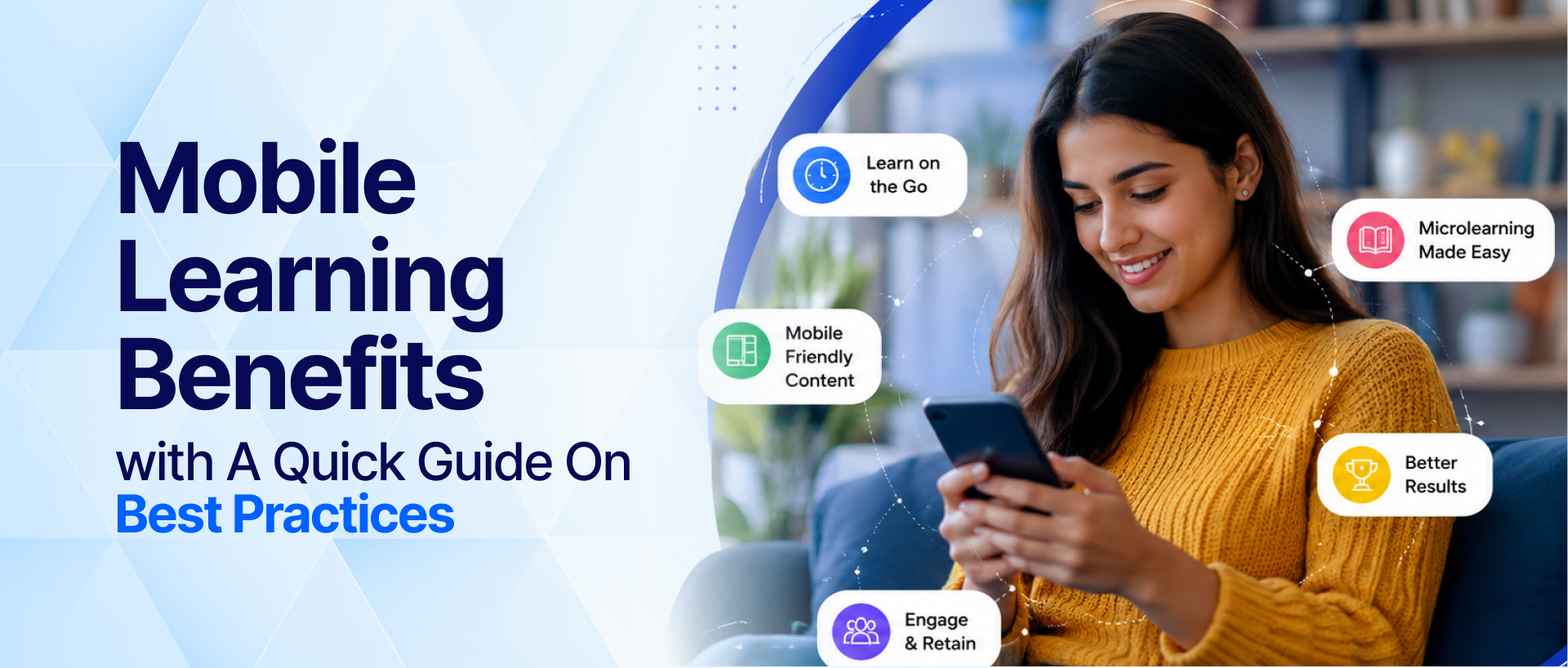
Wherever a question pops into your head, what do you do? The most obvious answer is to pull out your phone and search the question online. There, you get various results, each of them answering the question directly or indirectly, and this is all possible because of a smartphone.
According to research by the IMARC Group, the global market for mLearning solutions was valued at $45.15 billion in 2024 and is expected to grow to $156.55 billion by 2033. The growth rate of the market is 14.07% annually.
Long gone are the days when learning consisted only of a teacher, learners, and a blackboard, with no flexibility or interactive digital elements. Now, mobile learning solutions rule the field of training with interactive digital components and easy access.
This is the quality mobile learning services thrive on: the ease of learning that is not possible in other methods of training. In this article, we will take a brief look at mobile learning in terms of benefits, challenges, selection process, and best practices.
Mlearning solutions are digital education and training programs that are primarily developed to optimise on portable devices such as smartphones and tablets. This allows the learners to access the content for learning anytime they need and anywhere they want. The content is designed specifically to function on a smaller screen and with bold fonts, less content on each page, and bite-sized sessions for easy knowledge absorption.
The corporate learning sector chooses mobile learning services for their flexibility, which allows employees to learn at their own pace instead of following schedules or running to classrooms for training while cutting work hours.
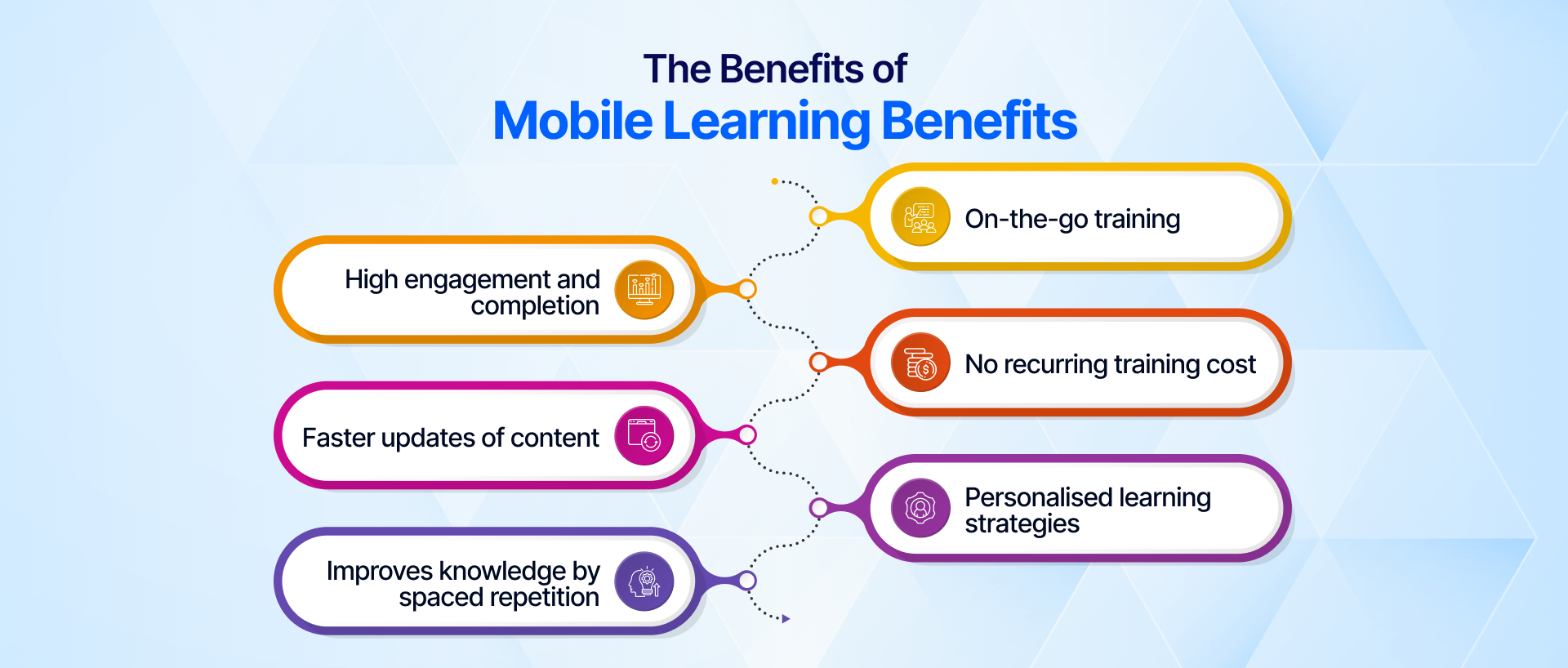
The employees already have tough schedules to follow at work, and if they also have to train in the same schedule in a traditional classroom environment, the learning value would take a dip because of the cluster of work and training. With the help of mLearning solutions, on-the-job training experience can be facilitated.
Mobile learning development services meet employees exactly where they want training to be available: on their personal device. Short and focused content that is delivered in the form of well-organised modules and microlearning makes the content highly engaging and leads to better completion rates. This way, employees do not have to find a computer every time training comes up; the complete process takes place in a natural work environment.
In a traditional training program, the organisations have to invest in a venue, printed materials, travel, and instructor fees, while all this will keep a gradual pace over time as training is ongoing. Whenever the next batch starts, there is a repetition of the same process and cost. On the contrary, mobile learning needs to be developed once, and then it can be scaled to thousands of learners without any recurring expenditure.
In mobile learning development services, the organisation can change or add content every time they launch a new product or need to spread awareness of new policies. The learning and development team can get the content ready, and then developers can update the content on the LMS (learning management system).
With custom mobile learning solutions with the integration of AI, the program can personalise the learning experience for everyone by tracking the learner activities on the platform and then suggesting learning content based on which topics they struggle with, not concepts they already know. This saves time that learners could waste in navigating through content.
With the mlearning solutions, organisations do not have to pay for post-training content because the program already consists of content that is short and provides quick bits of knowledge. The employees will eventually return to learning whenever they need clarification at work, or reinforcement modules will be pushed by notifications.
In many industries, more than 71% of employees prioritise flexibility when choosing a training format. While others may be more interested in better engagement, high completion rates, and any factor of training. That is because every company has different goals, and to achieve them, teams have to aim for a partner that can help them strategise the path with the right training.
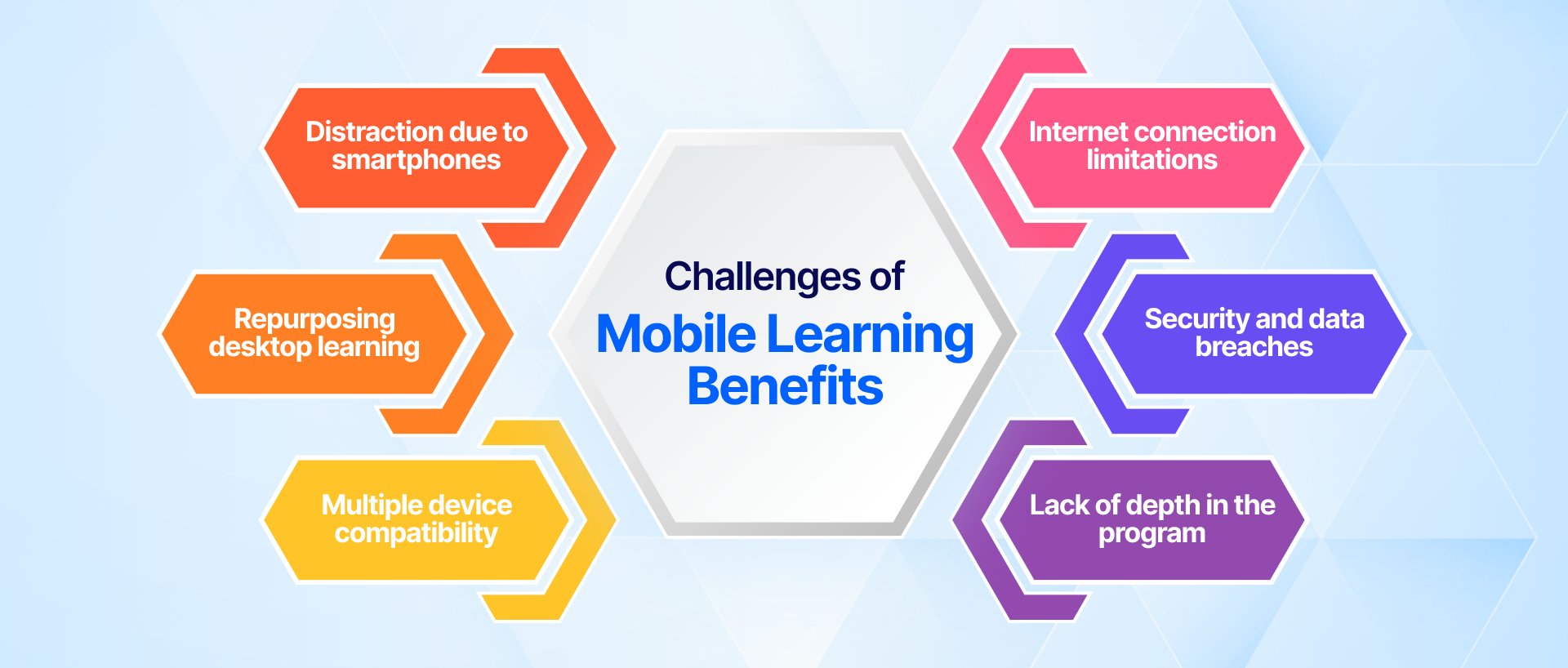
Nowadays, everyone has their personal mobile, and learning on the same device one uses for consuming entertainment content can be distracting. There could be pop-ups of different ads, notifications from games, text messages from friends, or something similar. Though this issue does not exist in traditional training, desktop programs also have fewer similar cases.
Many organisations repurpose their existing training content into mLearning solutions, but that never works out well because the desktop program content was designed to be displayed on a big screen, and now on a mobile screen, some bits of the content will be cut off the screen, which might confuse learners.
People these days own multiple devices like smartphones, tablets, laptops, and even a computer. While they are useful for different purposes, using them for one mobile-first program can be a technical challenge. A training that works perfectly on a tablet might not load on a mobile or display incorrect wording.
The custom mobile learning solutions heavily depend upon a stable internet connection and bandwidth. Learners who live in remote areas where the internet is not stable or strong enough to load programs. This issue is more persistent than some companies might think; it leads to gaps in training for employees who live in different locations.
When the organisation provides training on personal devices, the chances of security issues are higher because the company data is available on various mobile devices, maybe for hundreds or thousands of employees, and without any strict data privacy systems, the company cannot protect its data from online threats.
When the mobile development services are optimised for only the smartphone, the training program cannot carry in-depth content for teaching complex skills like leadership development and emotional intelligence, which require group discussion and hands-on practice. Mobile learning content is content-focused and struggles with layered formats.
In the marketplace, many organisations rely on mobile-based training programs, and over the years, the industry has come up with some best practices to get the most value worth from the program.
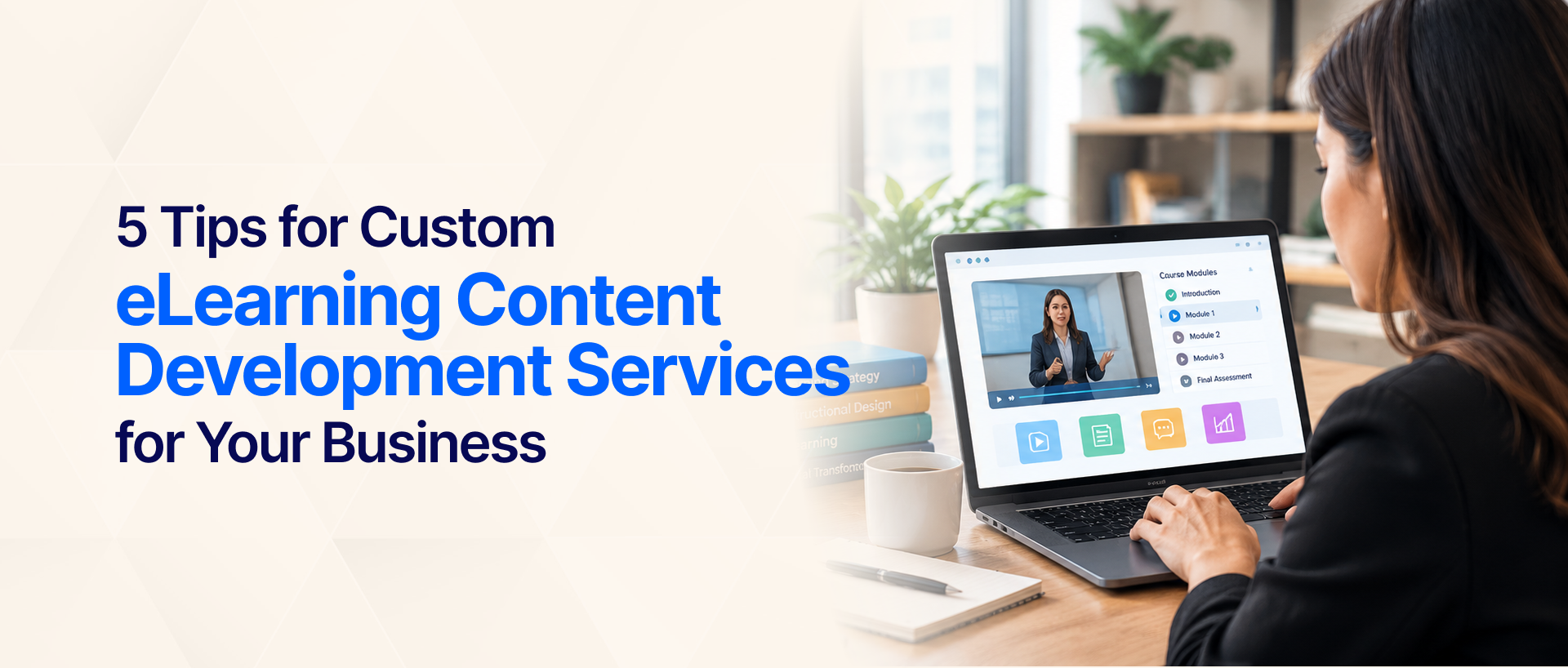
Mobile training content is supposed to be short and focused, with well-divided sessions into digestible chunks of 5 to 10 minutes, while each microlearning module covers one topic, skill, or scenario. The training is supposed to fit in the schedules of employees, not the other way around. Short content can be consumed at work, during breaks, or in commutes.
For effective learning, the mobile learning development services should be designed for accessing a smartphone as a priority basis. The layout and format will be developed for smaller touchscreen navigation screens, such as vertical scrolling, thumb-friendly touches, the right amount of text on the screen, and a visible font. Shrinking desktop content to mobile will not be able to deliver the right format.
The platform that will host custom mobile learning solutions should have built-in analytical tools from the beginning of the training, not upon the completion of the course. The learning management system should store learners' activities, progress rates, assessment scores, time spent on each module, and drop-off points for L&D to collect data and make future learning an even more immersive experience.
The multimedia elements are important, but the learning and development team needs to be careful with the placement. There are some popular usage methods for these elements, such as audio narration for scenario-based exercises, and images work well for reference learning. Adding multimedia in the wrong places can also create disruption in learning and make content appear less valuable in terms of quality.
Learning is not just a part of work life. A person retains most information when they are willing to develop new skills, not when they are on tight schedules. The mobile learning services should provide flexibility, which is possible with offline access and cross-device continuity.
Mobile learning solutions are most valuable when the content is based on real life and not slides with irrelevant exercises. The training will only provide a return on investment if the learners get useful knowledge to train themselves, like simulation practice for sales representatives. Real-life context training helps employees apply the knowledge at work faster.
Mobile learning solutions offer various formats of content delivery to learners and have significant benefits that favour modern workforces. The process also consists of challenges that can be resolved with different measures. The industry’s comprehension of best practices gives learners enough knowledge to shift training methods if the features are suitable for them.
The further process after learning about custom mLearning solutions depends on what the learner wants from the program. If they have just learned about the concept and wish to adapt the format for their team, then considering a service partner would give better insight, and similarly, the process differs with the goals.If you want to know more, you can contact Acadecraft today!

Share
Acadecraft has been an invaluable partner in our journey towards excellence in certification. Their commitment to delivering exceptional service, coupled with their unwavering dedication to timeliness and quality, has truly set them apart.
From the outset, their team has demonstrated a keen understanding of our needs, consistently delivering reports with meticulous attention to detail. Their responsiveness is commendable; whenever we've reached out with queries or requests, they've always been prompt and accommodating, ensuring a smooth and seamless experience.
One of the standout aspects of Acadecraft's service is their ability to deliver reports in a timely manner without compromising on quality. This has been instrumental in our decision-making processes, allowing us to make informed choices based on accurate and insightful data.
Acadecraft has consistently exceeded our expectations with their exemplary service, timely responsiveness, and unwavering commitment to quality.

Acadecraft's Voice-Over service was amazing! The team provided accurate and culturally relevant recordings for what we expected. They showed true professionalism and expertise. We highly recommend Acadecraft for their excellent Voiceover services.

Always impressed with Acadecraft's expertise! Their translation services play a vital role for our company to drive international growth within our team and clients.

AcadeCraft's assessment content creation team was able to understand our unique requirements and created customized assessments that fit our needs. The team was prompt and professional, and the quality of their work was good.

Acadecraft have recorded several audiobooks for us. They have a wide range of talented artists with different accents who really bring our stories to life. Their work is of high quality, with good attention to detail.
Acadecraft are reliable, efficient and friendly. Their services are highly recommended by us.

As a producer, I've had the pleasure of using Acadecraft for sourcing VO and liaising with artists for several film projects. They offer a wide range of VO profiles and the artists I have collaborated with all were talented and professional. The team at Acadecraft have supported me with great professionalism, responsiveness and creativity. I highly recommend their services.

Acadecraft has been helpful with connecting our editorial team with subject matter experts (SMEs) who help us QA assessments and create solutions for computational assessments. They have been able to find SMEs to meet our needs and our deadlines. We are happy to continue to partner with Acadecraft.

Acadecraft team is always very supportive, and we and Acadecraft corroborate to create educational contents for K12 Students in India.
We appreciate Acadecraft teams' professionality, punctuality, creation skills in each subject.

I am thrilled to share my testimonial for Acadecraft which creates interactive and engaging content. Working with this team has been an absolute pleasure from start to finish. Not only did they create outstanding content for our project, but they also went above and beyond to ensure that it was interactive, engaging, and effective.
Throughout the entire process, the team was highly cooperative and communicative, always available to resolve any issues or concerns that arose. They truly made us feel like partners in the project, and their dedication to delivering high-quality content was evident in every interaction.
Thanks to their exceptional work, our project was a huge success, and we couldn't be happier with the results. I highly recommend them to anyone looking for a team that is passionate, professional, and committed to excellence. Wishing them all the best in their future endeavors.

The team at Acadecraft has truly been an end-to-end service provider for us, providing content development services and their commitment, attention to detail and expertise have made the project a success. Their team's dedication, attention to detail, and expertise have been unmatched, making our partnership an absolute pleasure. We highly recommend Acadecraft to anyone looking for a reliable and efficient education solutions provider.

Our experience working with Acadecraft has been great. Their highly knowledgeable team of experts was always available to answer our questions, provide guidance, and ensure we were delighted with the services. Their thorough, accurate assessments provided valuable insights that helped us make informed decisions about our exam performances.
We look forward to continuing our partnership with Acadecraft and leveraging their expertise to help us achieve our business goals.

I recently used Acadecraft's Video Editing services and I am extremely impressed with the quality of their work. The team at Acadecraft was highly professional, attentive and skilled in delivering my company’s project on time and within budget.
Their attention to detail was impeccable, and they understood my needs and requirements very well. They were able to create a video that not only met my expectations, but far exceeded them.
Throughout the process, they kept me informed and updated on the progress of the project, and were always available to answer any questions I had. Their customer service was excellent, and they were always friendly and easy to work with.
I highly recommend Acadecraft's Video Editing services to anyone who is looking for a high-quality and professional video editing experience. They are truly experts in their field and I look forward to working with them again in the future.

The video creation team of Acadecraft is insightful. They understood my requirements carefully and delivered a winning video that perfectly aligned with my business needs.
With a good script, content, sound, and editing – Acadecraft helped me with the best video content to strategize my marketing and promotional campaigns. Their tremendous experience in video editing and professionalism in serving the customer before and after delivering services are commendable.
The passionate team knows great about getting into the details and providing impeccable video services. I am extremely impressed by the work Acadecraft has delivered to me.
I appreciate my collaboration with Acadecraft and look forward to availing of services again.

I required an explainer video for my business, and I am mesmerized by the work Acadecraft’s video editing team delivered to me. The perfectly aligned video elements and superb editing demonstrate the experience, knowledge, and professionalism Acadecraft has.
Acadecraft’s 3d video solutions are amazing. They used a perfect blend of art, color, shape, sound, and editing to create the video, making the video engaging and immersive.
I have always been excited to explore the opportunities of videos in business, and it was my pleasure to make Acadecraft my companion for the best video solutions. I highly recommend this organization and would love to collaborate with them again.

With a holistic approach to creating powerful blended videos, Acadecraft delivered me a well-developed video solution. I appreciate the relentless efforts of the video editing team, whose in-depth knowledge and analytical skills effectively catered to my needs.
The services Acadecraft has given me exceeded my expectations; the team was effective and listened to my requirements carefully, and went the extra mile in researching and creatively developing awesome pieces of video content.
Not only from a quality perspective but on the management and delivery front, Acadecraft’s services are prolific. They stuck to the turnaround time and were constantly in touch with me throughout the creation process.
I recommend Acadecraft for video solutions as they have great hands-on use of animation, graphics, and other creative assets.

I am thoroughly astounded by Acadecraft's proficient skills! Their exceptional voiceover and translation services were instrumental in amplifying our marketing endeavors and video promotions. They enabled us to communicate effectively with varied audiences and significantly propelled growth across numerous media platforms.

Working along with Acadecraft has been an exceptional journey. Their meticulous attention to detail and commitment to maintaining the essence of the content in the transition from English to Arabic was truly impressive. The collaborative spirit and timely communication made the entire process smooth and enjoyable. Without a doubt, I wholeheartedly endorse their services for a remarkable translation experience.

I am delighted to share my feedback with you on working on the editing and print layout of 9 documents under the KECF project. Overall, I am very happy with the speed with which these documents were edited and the fine attention to details. I also deeply appreciate the quick corrections that were made on our request. Particularly, working with Sanjana was a real pleasure, as I found her very attentive to our requests and her internal quality checks before she sent the documents to us greatly reduced my workload. So many thanks Sanjana! I look forward to working with your agency if such a need arises in future too. Many thanks to Sanjana and your entire team.
I am pleased to share that Acadecraft has demonstrated an excellent understanding of our Operations processes, ensuring a smooth and efficient knowledge transfer. The team, including the project coordinators, is highly responsive and addresses any concerns swiftly leading to effective resolutions and seamless delivery.

With our continued global expansion and projects- it was necessary that we join in partnership with Acadecraft. As they have assisted us in increasing production value in all sectors of our company; providing great infrastructure with top professionals. Acadecraft represents efficiency to execution to many of our projects and initiatives with a standard of excellence unmatched.