 By:
Marilyn Schenk
By:
Marilyn Schenk 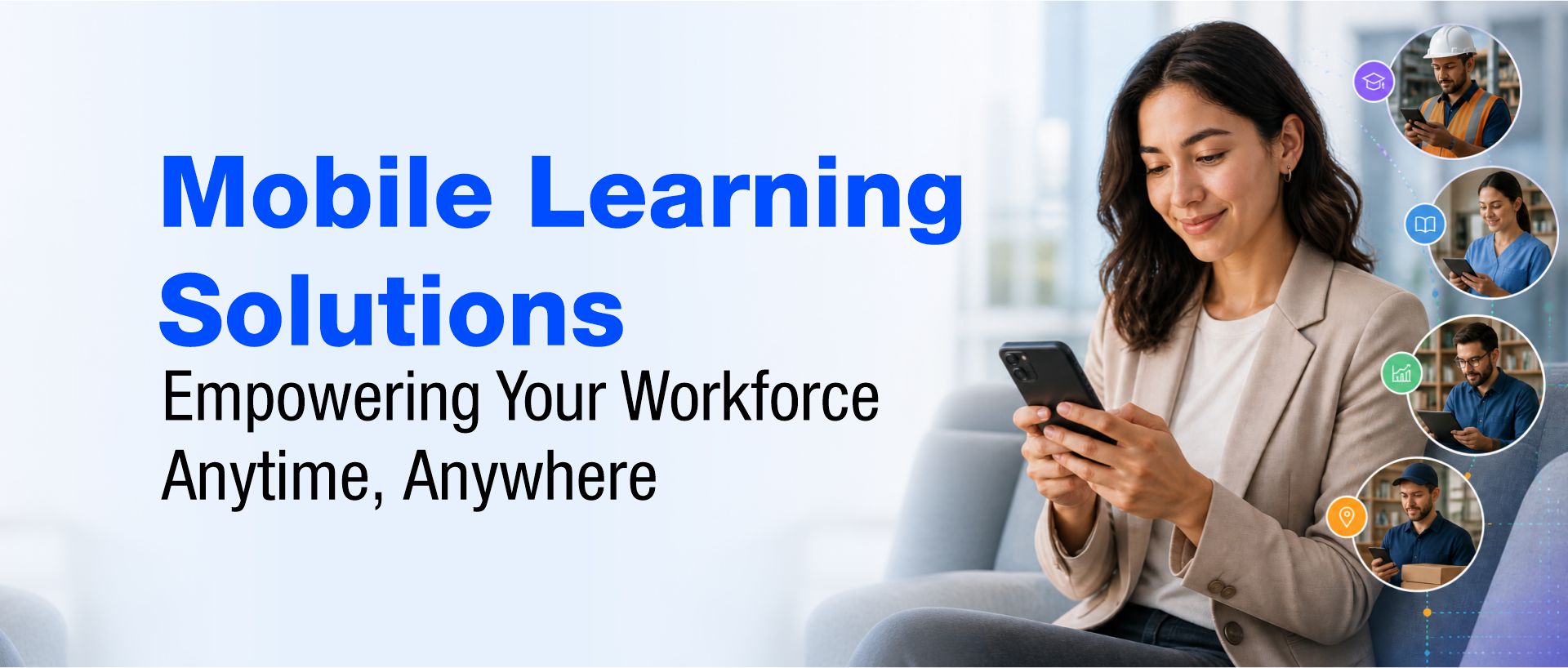
In a workplace where every employee wants training that is fast, efficient, and accessible at all times. A traditional program or desktop-based course would not meet the organisation's training needs.
Mordor Intelligence, in their mobile learning market size, trends, and analysis report, states that the market is worth 95 USD billion in 2026 and growing at a rate of 15.89% and is expected to reach 200.24 USD billion by the year 2031.
Companies are always in a state of flux due to market changes, workforce changes, and many other reasons, but throughout all this time, they have to deliver constant high ranks and produce outstanding products for clients, and to make it possible, they need highly skilled employees.
To achieve a highly proficient workforce, it is important for the organisation to take the help of mobile learning development services to empower its workforce with flexibility, on-time assessments, and micro lectures. This is one of the most efficient ways possible.
Mobile learning services are often used by learners who want a training program that is accessible anytime and anywhere, and companies that want their workforce to be experts in many fields, which is possible with repetitive learning. A learner can visit each session unlimited times for a quick overview of the concept in M-learning.
Mobile learning solutions are used for learning individuals and training workers, accessible only on portable devices such as smartphones, tablets/iPads, laptops, and AR/VR headsets.
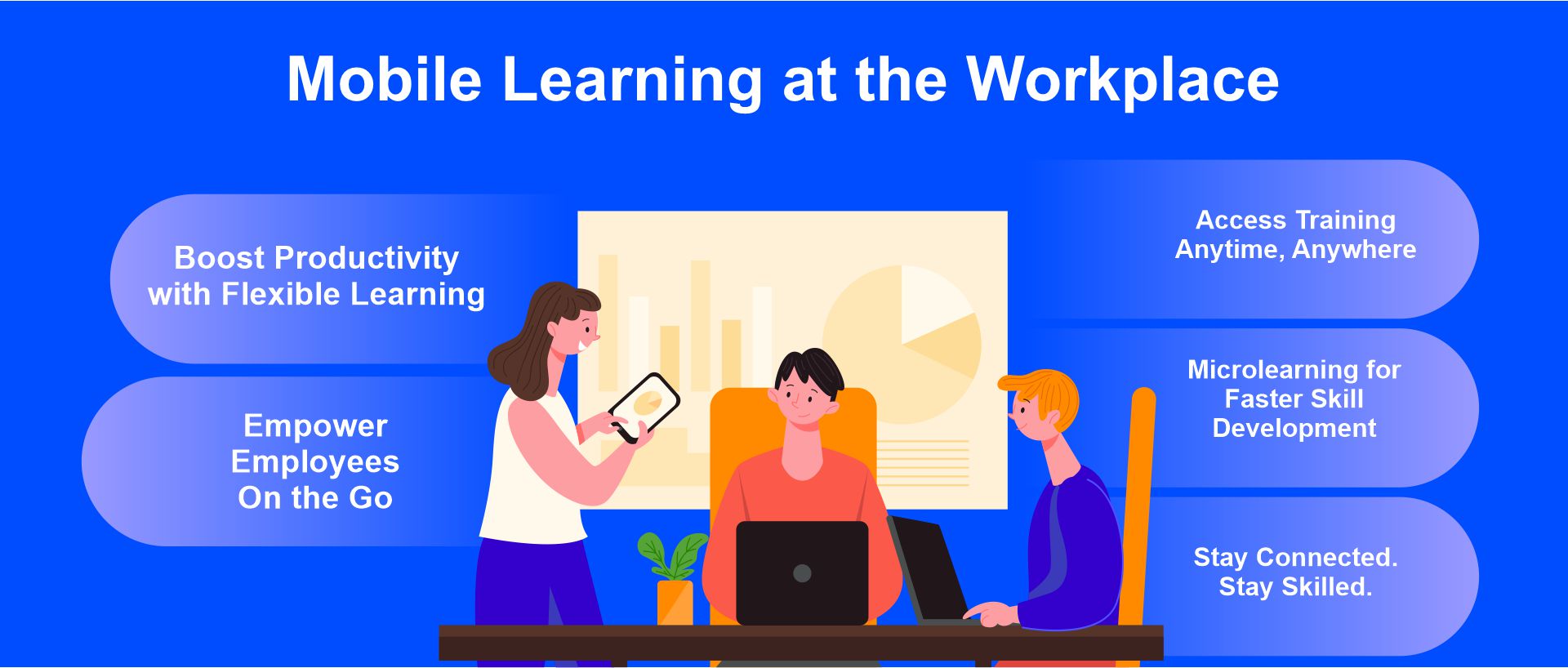
When a new employee joins the company, they need to get comfortable and perform well among their colleagues. During that period, training is scheduled, but a traditional learning course would take months to complete the process.
But mlearning solutions now offer programs that can help with teaching the company policies and job role duties before starting work. This assures self-paced training that allows newcomers to revisit the modules multiple times for better retention in a few weeks.
In the traditional in-class method, the employees were required to attend the workshop, which wasted half their day from working hours, instead of learning something new from it. Custom mobile learning solutions step up for effective learning with the precise content decided by authorities and industry experts, which will be added to the employees' skill set and used for the company's future goal-achieving strategies.
Team members can practice different pitches and customer handling in simulations created by mobile learning solutions. This training can help them with identifying new market trends, the latest pricing, and various methods to sell the product or service.
After this training, employees will be able to offer better services to clients because a well-trained workforce is aware of the task and will execute it with impressive confidence, which may lead to the potential of better sales and ROI.
Imagine an employee is attending a meeting, and they are not able to share their screen on Microsoft Teams. It would mess with the confidence of the worker, but if the manager has already familiarised the employee with mobile learning services for their job role, they can just access the video lecture and learn to share a screen in a few minutes, and perform any other such tasks.
If an enterprise has remote workers, and for corporate training they use a program that does not allow equal distribution of the same content across different devices, then the chances of conflicts and partiality among employees are high. Remotely working employees might not receive the same level of knowledge as office workers, leading to uneven training.
But programs designed for smartphones, such as mobile learning development services, mostly have the capacity to distribute the same course to every worker regardless of their workplace.
These types of programs are mostly useful for skill development and preparing workers for safety drills because none of these tasks is something to be completed in a single session. To comprehend such skills, the workers have to learn repetitively over a certain period of time.
Employees can hold discussions among themselves during breaks or meetings about what they learned in lectures and their performance in simulations. This opens the door for clearance in case it is needed, without the interference of the instructor, building peer connections.
The manager or L&D team can evaluate the potential of each learner after completing the program or whenever they want during the course. Mobile learning development services offer quizzes and assessments. This gives companies a clear understanding of their every employee's capabilities for deciding the share of credits in each project.
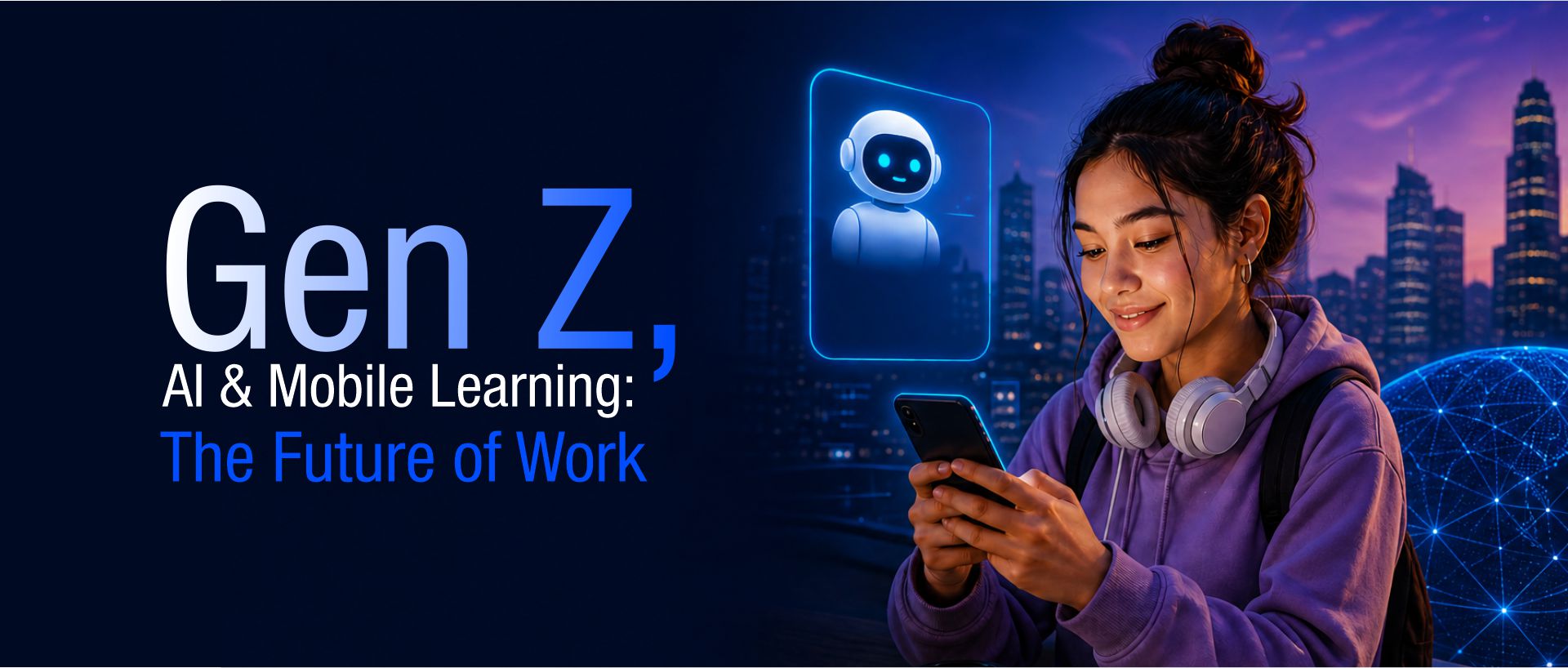
Gen Z is the generation that was raised in circumstances when the world was experiencing a major shift from traditional and desk learning to online programs, so they did not have to adapt; the skills came naturally, and that became the major cause of why they expect flexible and digital training by default.
The custom mobile learning solutions now provide a personalised and digital path to every employee and are continuously improving for the betterment.
The newer generation in workplaces does not want to handle dual tasks when they are working; holding the work and training sessions together could drive them to have less interest in learning new things. That is why mobile learning development courses allow users to practice at any time, with the help of AI suggestions in case the employees are asking wrong or repetitive questions. Giving them the opportunity for growth when they find it suitable.
For training the employees, especially the Gen Z workers, organisations need a constant background presence to help them solve minor issues like accessing the web and starting discussions regarding the program. Having a human trainer throughout the day is not feasible. Hence, AI chatbots are available 24/7 for them to solve queries.
The integration of AI in mobile learning services has led the training program to be more precise about the direction that should be followed by each learner. The server makes the quizzes harder or easier based on their understanding. If the case is entirely changed, the learner is performing very poorly, and the system will automatically inform the manager or admin to take a brief look.
The desktop training programs showed a major drawback when companies tried to track the completion rate of custom mobile learning solutions. When managers saw employees working effectively in person while running the program, the authorities checked the reports, and they showed a relatively lower completion rate.
The main reason behind this was the SCORM tracking system; it is used by the masses, but does not track the performance if learners switch operating systems or go offline during sessions. Now, to solve this problem, companies have started to switch from SCORM to xAPI as an alternative tracking method.
The Difference Between xAPI and SCORM
Before the market adopted portable-device-operated courses, there was traditional learning, which included loads of knowledge in a single sitting, which burdened employees. There were high chances of error after training because learners were not able to retain information in bulk from long-hour sessions.
Mobile learning development services now erase this problem with repetitive content, regular assessment, and microlearning. Here, the return on investment is fewer errors in the system.
There is a period of time after the hiring process is completed before newcomers take full control of his/her role in the organisation. This gap is for training, and companies are paying workers a fixed salary while they deliver slower results due to slow training.
But mobile learning services are capable of providing the same training in the span of half the time as traditional learning, which means the company saves costs on training and receives full-value work in the remaining training time.
3. The stat-driven content
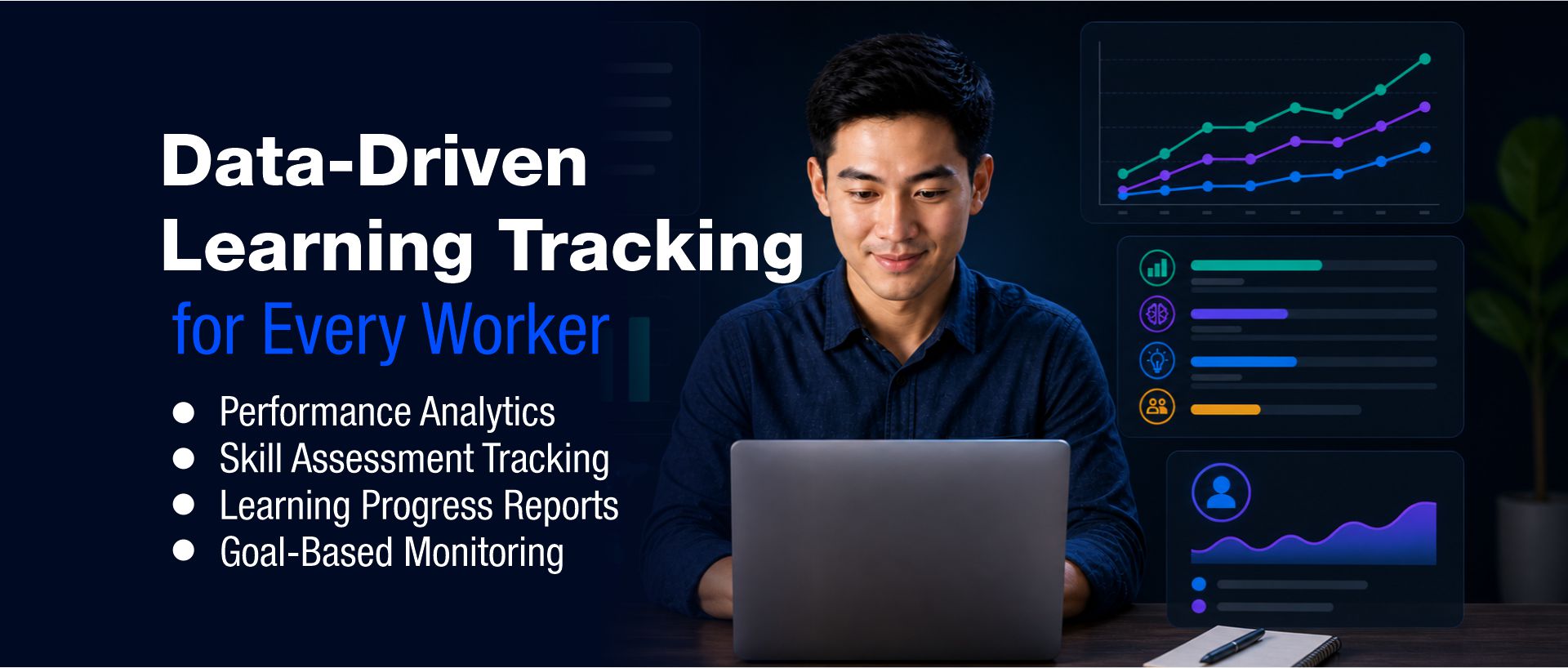
The program is designed to give real analytical reports of learners to managers based mainly on engagement rates, completion, and skill gaps covered or yet to be completed. This helps the L&D team show actual ROI rather than showing up with only cost reduction at monthly meetings.
In this process, the company also has the reading of what is working for the learner and which part should be discarded; authorities can customise the course for better results at lesser expenditure.
4. On-time learning
When learners used to rely on traditional learning, the sessions taught everything in a moment, which had no connection with the actual moment, like the class was scheduled for compliance training and rules, but when employees were actually in a scenario where they needed to apply the same knowledge, the information was long gone.
Mlearning solutions provide quick and short sessions when the employees need them, and this has become increasingly important for teams and companies to save costs in the sector of customer completions because they try to solve the problem on the first call.
Read more: 10 Benefits of Using AI in Mobile eLearning
The flexibility these programs provide is truly refreshing for employees who want to maintain a balance between their personal lives and work. But there is always room left for betterment in every program and curriculum. Workforces try to fill the gap with the help of various strategies existing in other courses.
Merging different statutes and tools with mobile learning services will be able to give new elements, such as a game-based learning blend, which can provide a fun and engaging experience to learners in a game-like manner.
In today's time, nearly every employee has their personal smartphone, but still relying on desktop programs for developing new skills is like making your biggest asset, the company, a bottleneck. The organisations that have adopted mobile learning solutions are already ahead of their competition and have reported increased sales and reduced standard time consumed by the average training program.
The m-learning solutions are designed for organisations that want to bring change to their company services and develop the workforce to be more competent and confident in the market, with courses that are easy for learners to adjust to.
Gen Z's demands played the major role in the rise in adoption of portable learning programs for better training that does not require them to sit through hour-long lectures for scraps of information, and the generative AI invasion added to the personalisation of e-learning, which was lacking. You want to know more, you can contact Acadecraft today!
Share
Acadecraft has been an invaluable partner in our journey towards excellence in certification. Their commitment to delivering exceptional service, coupled with their unwavering dedication to timeliness and quality, has truly set them apart.
From the outset, their team has demonstrated a keen understanding of our needs, consistently delivering reports with meticulous attention to detail. Their responsiveness is commendable; whenever we've reached out with queries or requests, they've always been prompt and accommodating, ensuring a smooth and seamless experience.
One of the standout aspects of Acadecraft's service is their ability to deliver reports in a timely manner without compromising on quality. This has been instrumental in our decision-making processes, allowing us to make informed choices based on accurate and insightful data.
Acadecraft has consistently exceeded our expectations with their exemplary service, timely responsiveness, and unwavering commitment to quality.

Acadecraft's Voice-Over service was amazing! The team provided accurate and culturally relevant recordings for what we expected. They showed true professionalism and expertise. We highly recommend Acadecraft for their excellent Voiceover services.

Always impressed with Acadecraft's expertise! Their translation services play a vital role for our company to drive international growth within our team and clients.

AcadeCraft's assessment content creation team was able to understand our unique requirements and created customized assessments that fit our needs. The team was prompt and professional, and the quality of their work was good.

Acadecraft have recorded several audiobooks for us. They have a wide range of talented artists with different accents who really bring our stories to life. Their work is of high quality, with good attention to detail.
Acadecraft are reliable, efficient and friendly. Their services are highly recommended by us.

As a producer, I've had the pleasure of using Acadecraft for sourcing VO and liaising with artists for several film projects. They offer a wide range of VO profiles and the artists I have collaborated with all were talented and professional. The team at Acadecraft have supported me with great professionalism, responsiveness and creativity. I highly recommend their services.

Acadecraft has been helpful with connecting our editorial team with subject matter experts (SMEs) who help us QA assessments and create solutions for computational assessments. They have been able to find SMEs to meet our needs and our deadlines. We are happy to continue to partner with Acadecraft.

Acadecraft team is always very supportive, and we and Acadecraft corroborate to create educational contents for K12 Students in India.
We appreciate Acadecraft teams' professionality, punctuality, creation skills in each subject.

I am thrilled to share my testimonial for Acadecraft which creates interactive and engaging content. Working with this team has been an absolute pleasure from start to finish. Not only did they create outstanding content for our project, but they also went above and beyond to ensure that it was interactive, engaging, and effective.
Throughout the entire process, the team was highly cooperative and communicative, always available to resolve any issues or concerns that arose. They truly made us feel like partners in the project, and their dedication to delivering high-quality content was evident in every interaction.
Thanks to their exceptional work, our project was a huge success, and we couldn't be happier with the results. I highly recommend them to anyone looking for a team that is passionate, professional, and committed to excellence. Wishing them all the best in their future endeavors.

The team at Acadecraft has truly been an end-to-end service provider for us, providing content development services and their commitment, attention to detail and expertise have made the project a success. Their team's dedication, attention to detail, and expertise have been unmatched, making our partnership an absolute pleasure. We highly recommend Acadecraft to anyone looking for a reliable and efficient education solutions provider.

Our experience working with Acadecraft has been great. Their highly knowledgeable team of experts was always available to answer our questions, provide guidance, and ensure we were delighted with the services. Their thorough, accurate assessments provided valuable insights that helped us make informed decisions about our exam performances.
We look forward to continuing our partnership with Acadecraft and leveraging their expertise to help us achieve our business goals.

I recently used Acadecraft's Video Editing services and I am extremely impressed with the quality of their work. The team at Acadecraft was highly professional, attentive and skilled in delivering my company’s project on time and within budget.
Their attention to detail was impeccable, and they understood my needs and requirements very well. They were able to create a video that not only met my expectations, but far exceeded them.
Throughout the process, they kept me informed and updated on the progress of the project, and were always available to answer any questions I had. Their customer service was excellent, and they were always friendly and easy to work with.
I highly recommend Acadecraft's Video Editing services to anyone who is looking for a high-quality and professional video editing experience. They are truly experts in their field and I look forward to working with them again in the future.

The video creation team of Acadecraft is insightful. They understood my requirements carefully and delivered a winning video that perfectly aligned with my business needs.
With a good script, content, sound, and editing – Acadecraft helped me with the best video content to strategize my marketing and promotional campaigns. Their tremendous experience in video editing and professionalism in serving the customer before and after delivering services are commendable.
The passionate team knows great about getting into the details and providing impeccable video services. I am extremely impressed by the work Acadecraft has delivered to me.
I appreciate my collaboration with Acadecraft and look forward to availing of services again.

I required an explainer video for my business, and I am mesmerized by the work Acadecraft’s video editing team delivered to me. The perfectly aligned video elements and superb editing demonstrate the experience, knowledge, and professionalism Acadecraft has.
Acadecraft’s 3d video solutions are amazing. They used a perfect blend of art, color, shape, sound, and editing to create the video, making the video engaging and immersive.
I have always been excited to explore the opportunities of videos in business, and it was my pleasure to make Acadecraft my companion for the best video solutions. I highly recommend this organization and would love to collaborate with them again.

With a holistic approach to creating powerful blended videos, Acadecraft delivered me a well-developed video solution. I appreciate the relentless efforts of the video editing team, whose in-depth knowledge and analytical skills effectively catered to my needs.
The services Acadecraft has given me exceeded my expectations; the team was effective and listened to my requirements carefully, and went the extra mile in researching and creatively developing awesome pieces of video content.
Not only from a quality perspective but on the management and delivery front, Acadecraft’s services are prolific. They stuck to the turnaround time and were constantly in touch with me throughout the creation process.
I recommend Acadecraft for video solutions as they have great hands-on use of animation, graphics, and other creative assets.

I am thoroughly astounded by Acadecraft's proficient skills! Their exceptional voiceover and translation services were instrumental in amplifying our marketing endeavors and video promotions. They enabled us to communicate effectively with varied audiences and significantly propelled growth across numerous media platforms.

Working along with Acadecraft has been an exceptional journey. Their meticulous attention to detail and commitment to maintaining the essence of the content in the transition from English to Arabic was truly impressive. The collaborative spirit and timely communication made the entire process smooth and enjoyable. Without a doubt, I wholeheartedly endorse their services for a remarkable translation experience.

I am delighted to share my feedback with you on working on the editing and print layout of 9 documents under the KECF project. Overall, I am very happy with the speed with which these documents were edited and the fine attention to details. I also deeply appreciate the quick corrections that were made on our request. Particularly, working with Sanjana was a real pleasure, as I found her very attentive to our requests and her internal quality checks before she sent the documents to us greatly reduced my workload. So many thanks Sanjana! I look forward to working with your agency if such a need arises in future too. Many thanks to Sanjana and your entire team.
I am pleased to share that Acadecraft has demonstrated an excellent understanding of our Operations processes, ensuring a smooth and efficient knowledge transfer. The team, including the project coordinators, is highly responsive and addresses any concerns swiftly leading to effective resolutions and seamless delivery.

With our continued global expansion and projects- it was necessary that we join in partnership with Acadecraft. As they have assisted us in increasing production value in all sectors of our company; providing great infrastructure with top professionals. Acadecraft represents efficiency to execution to many of our projects and initiatives with a standard of excellence unmatched.